Tai Chi & Qigong for Balance, Mobility and Inner Calm
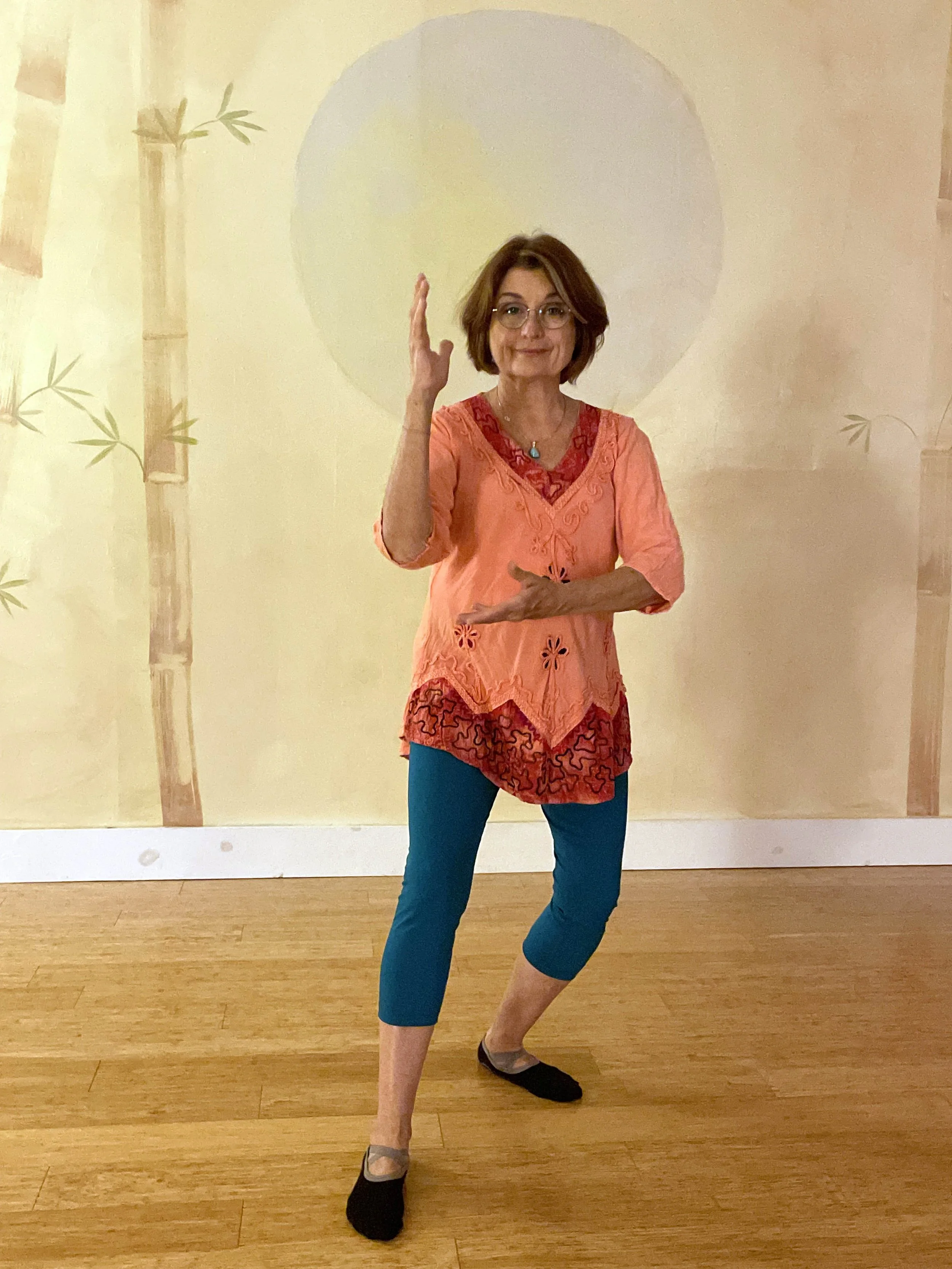
Tai chi is an ancient Chinese martial art known for its slow, relaxed movements.
Tai Chi is both a form of self-defense and a moving meditation. Its gentle, flowing movements are circular and never forced, keeping the muscles and joints relaxed rather than tense. Recommended by the National Arthritis Foundation, tai chi supports overall well-being when practiced regularly. Benefits include improved balance and flexibility, stronger tendons and joints, enhanced cognitive function, and reduced stress and anxiety.
Tai Chi for Beginners
If you have ever watched people doing tai chi and thought it looked relaxing but too complicated to learn, then this is the class for you! We begin each class with physical warm-ups to help loosen our joints and muscles; clear stuck, stagnant mental energy; and connect with our Chi (or Qi) – life force energy. You’ll also learn how to connect with the “3 Forces” of Life – Earth force, Universal Life force, Cosmic Heart Qi - and store some of that Qi internally so you can use it in times of stress.
How Tai Chi Supports the Whole You
Tai Chi, the “grandfather of all martial arts”, is also referred to as moving meditation due to its slow, relaxed, circular movements. Tai chi is recommended by the National Arthritis Foundation. When practiced regularly, Tai Chi health benefits include:
* improves physical balance and flexibility;
* strengthens tendons and joints;
* enhances cognitive functioning; and
* reduces emotional stress and anxiety.
Quan Yin Heart Qigong
In this qigong series, you will learn the 10 graceful, heart-opening movements of Quan Yin Heart Qigong. Physically, this practice strengthens the spine and aids in developing healthier muscles. Energetically, the movements purify your body’s meridian systems - like acupuncture without the needles.
This form was developed by Taoist Grandmaster Li Jun Feng who states: "Learn to love the body. Enjoy the practice and see your body as your boat on your journey to Love." As you practice this gentle, yet powerful form, fresh Qi flows throughout your body restoring the suppleness and compassion of your body-heart-mind.
Practicing Quan Yin Qigong naturally leads to a feeling of coming home - to one's own Heart. This is great for beginners as well as experienced tai chi, qigong or yoga practitioners. A mix of standing and moving qigong, the entire practice can be adapted to sitting in a chair.
Meet Your Guide
LinDel teaches Tai Chi Chi Kung, a 13-movement short form of Yang Family tai chi as developed by Grandmaster Mantak Chia (author of over 30 books on practicing Chi Kung for health and longevity). Because this is a short form, the moves can be learned fairly quickly. Plus, you don’t need a lot of space to do the form so it’s easier to practice on your own. LinDel teaches in a fun, non-intimidating way and believes, “if you can pat your head and rub your belly at the same time, you can learn tai chi.